Feb. 24, 2026
The Health Federation of Philadelphia’s RE-SET program is up and running since its launch in 2025, partnering with seven organizations in providing evidence-based cancer care interventions and supporting quality improvement initiatives.
Through this partnership with Merck, known as MSD outside the United States and Canada, the Health Federation collaborates with community providers to support educational and informational activities related to cancer care practices.

The program is focused across Philadelphia communities, with the goal of supporting individuals at risk for colorectal and breast cancer in obtaining needed services as quickly and efficiently as possible.
Funded organizations are tasked with achieving two or more of the following goals and objectives:
- Supporting follow-up outreach to enable patients to access additional pathways to appropriate care.
- Supporting effective, bidirectional communication between primary care and large health systems to promote coordination, information sharing, and alignment across care settings
- Supporting non-medical needs of individuals navigating cancer-related services and resources
List of awardees:
- The African Family Health Organization (AFAHO). AFAHO seeks to increase breast health knowledge, expand access to screening, and ensure follow-up care for African and Afro-Caribbean women to reduce late-stage diagnoses. Their “Me First” breast cancer program will provide individualized outreach, education, and barrier reduction to help close these gaps in care.
- Delaware Valley Community Health (DVCH). DVCH seeks to strengthen tracking, follow-up, and care coordination for breast and colorectal cancer screening, aiming to reduce disparities in preventive care and improve outcomes in underserved populations.
- Esperanza Health Center (EHC). EHC seeks to improve breast and colorectal cancer screening rates, expand patient outreach, and increase abnormal cancer screening follow-up rates across its patient population.
- Family Practice and Counseling Services Network (FPCSN). FPCSN seeks to enhance colorectal cancer screening through centralized outreach, patient engagement, and navigation strategies, with the goal of expanding to additional health centers and screening types.
- Greater Philadelphia Health Action, Inc. (GPHA). GPHA seeks to reduce breast cancer disparities by identifying women ages 40-74 overdue for mammography and providing outreach, education, and support to ensure timely screening and follow-up.
- Ambulatory Health Services, Health Center #9 (AHS). AHS seeks to expand breast and colorectal cancer screening and follow-up at Health Center #9, located in northwest Philadelphia, targeting African American and uninsured patients.
- Spectrum Health Services, Inc. Spectrum seeks to expand cancer screening and patient navigation to reduce disparities in breast and colorectal cancer care, increase screening rates, reduce delays in diagnosis, and improve outcomes.
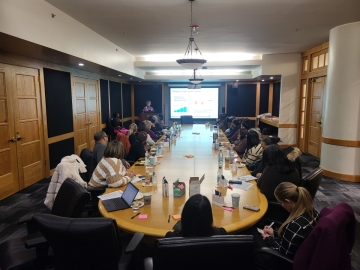
A key component of this work includes establishing a Cancer Care Navigator Collaborative, composed of navigators and care coordination staff throughout the city. The collaborative’s meetings aim to create opportunities for connection, teamwork and implementing strategies that improve patient-centered care, from cancer screening and diagnosis through treatment and survivorship. This group met for the first time on January 22, 2026, with representation across multiple FQHCs and health system partners.
“Our collaborative offers a space for navigators to share their experiences, hone their skills and come away with tangible tools and solutions that can be implemented in real time,” said Jenny D. Brice, Director of Care Management Programs.
About the Health Federation of Philadelphia
The Health Federation of Philadelphia is a public health nonprofit that promotes community health by advancing access to high-quality, integrated, comprehensive health and human services.
The Health Federation of Philadelphia serves as a keystone supporting a network of Community Health Centers as well as the broader base of public and private-sector organizations that deliver healthcare, public health and human services to vulnerable populations.
--
*The activities discussed in this press release were supported by funding from Merck. Merck had no role in the design, collection analysis and interpretation of data, in writing of the press release, or in the decision to submit the press release for publication. The content of this press release is solely the responsibility of the author(s) and does not represent the views of Merck.